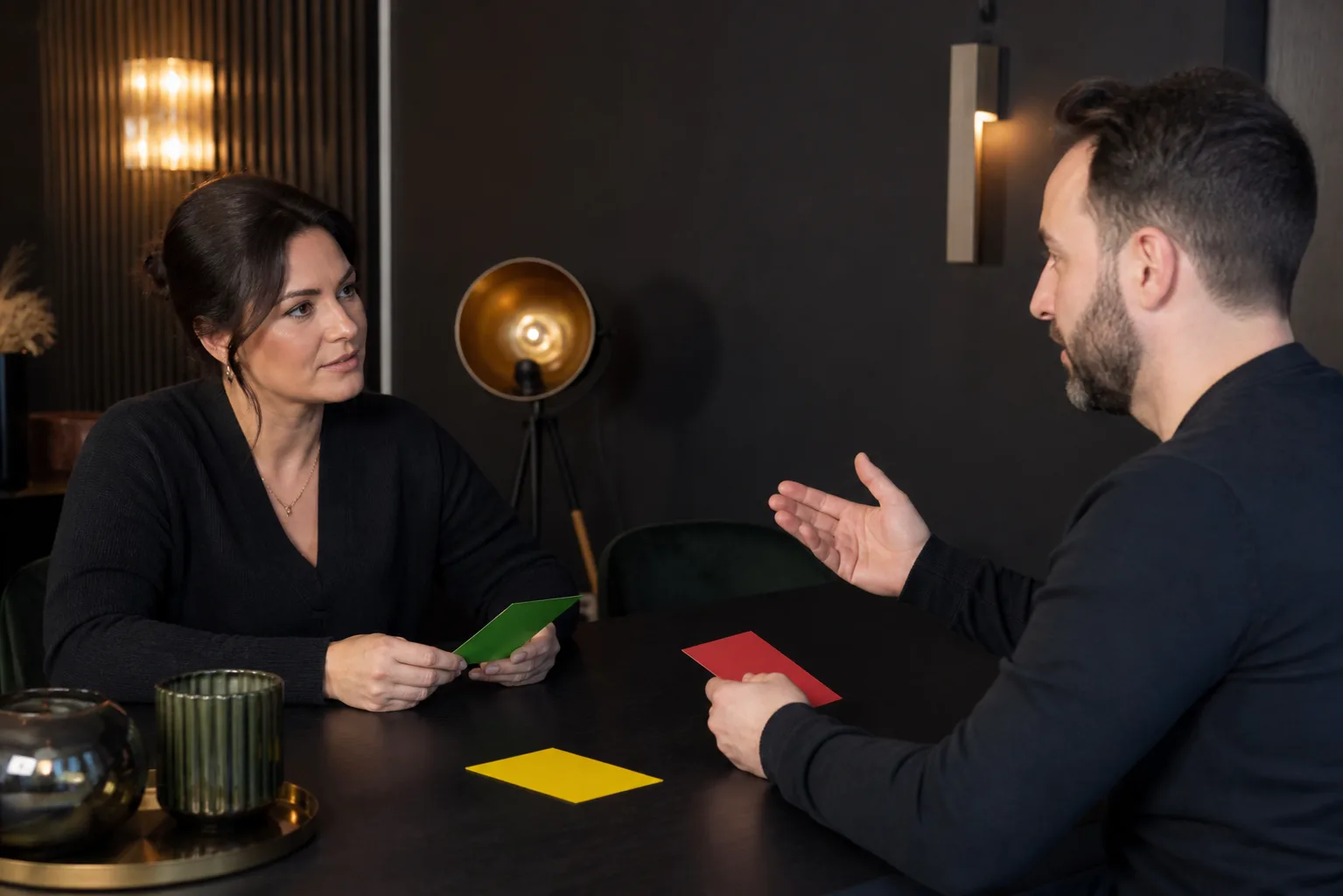
A title can sound intoxicating. Dominant. Master. Owner. But a beautiful title is only an invitation to ask better questions; it is never evidence that someone deserves authority.
A Dominant may enjoy directing. A submissive may enjoy yielding within agreed limits. A Switch may enjoy either side depending on the partner or context.
Master and slave are usually more relationship-specific and should never be assumed from appearance.
Dominant and Submissive
Dominant describes the person taking an agreed directing role; submissive describes the person yielding agreed control.
Neither role determines gender, personality, income, strength, or value outside the dynamic.
A quiet person can be dominant, and an assertive professional can be submissive.
Master and Slave
Some adults use these titles for a broader or more symbolic authority structure.
The language can sound absolute, but ethical relationships still have consent, boundaries, and exit rights.
The title must be defined by the people using it, not by internet stereotypes.
Switch and Context
Switches may change roles between partners, scenes, or phases of life.
Someone can also be dominant in one activity and submissive in another.
Preference is often a spectrum rather than a permanent category.
Roles Do Not Determine Personality
A dominant does not need to be loud, cruel, or emotionally distant. Many skilled dominants are calm because they do not need constant theatrics to hold attention.
Submissives are not automatically passive outside a dynamic. They may be decisive professionals, caregivers, leaders, or people who simply enjoy setting responsibility down in a chosen context.
Do not confuse role with worth. Yielding authority can be active and intentional; directing another person carries responsibility rather than superiority.
Bottom, Top, Dominant, and Submissive
Top and bottom often describe who performs or receives an activity. Dominant and submissive describe the power structure. A top may perform an action without taking psychological authority, while a service-oriented dominant may direct without performing the most visible activity.
The distinction matters because physical position does not automatically define relationship power.
Questions Behind Any Role Label
Ask what the role includes, when it begins, how it ends, and what remains outside it. Ask how conflict is handled and whether the person can hear no without retaliating.
Someone who becomes angry when asked to define their authority is showing you precisely why they should not receive it.
The most convincing dominance is not announced. It appears through consistency, restraint, knowledge, and the ability to make another adult feel safe enough to be honest.