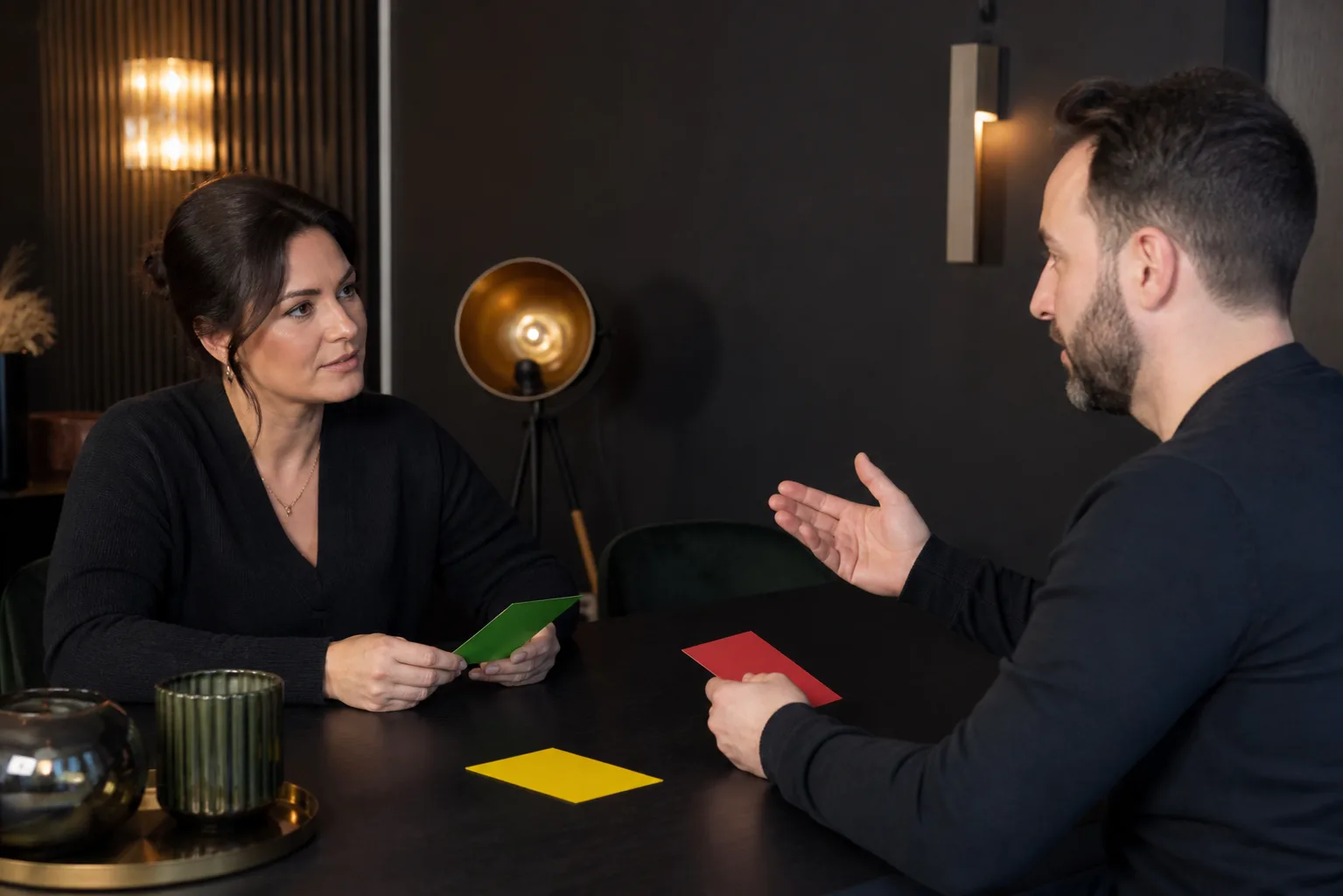
A safeword is not a timid interruption. It is one of the tools that lets adults approach intensity without pretending they have become incapable of changing their minds.
It gives adults a clear way to pause or stop when ordinary words may be part of role-play.
The familiar traffic-light system is simple, but only works when everyone agrees on its meaning.
Green, Yellow, and Red
Green commonly means the current intensity is acceptable. Yellow means slow down, check, or change something. Red means stop the activity.
Partners should define these terms before a scene because people may use them differently.
Red should lead to prompt action, not debate or punishment.
Nonverbal Signals Matter
A person may be unable to speak because of noise, a gag, panic, or medical distress.
A prearranged hand signal or held object can supplement verbal communication, but risky communication restrictions require specialized knowledge.
Loss of response is not consent; it is a reason to stop and assess.
Check-Ins Are Still Necessary
The directing partner remains responsible for observing breathing, circulation, coordination, emotional state, and unexpected changes.
A submissive may freeze or struggle to speak.
Safewords support active care; they do not replace it.
Choose Words That Cannot Be Confused
Ordinary words such as “no” or “stop” may appear inside some role-play, which is why adults often choose unrelated terms. The words should be easy to remember, pronounce, and recognize in the expected environment.
Discuss what each signal requires. Does yellow mean reduce intensity, change position, or pause for conversation? Does red mean all activity stops immediately? Agreement before the scene prevents argument during stress.
A Safeword Is Not Enough by Itself
Pain, panic, reduced circulation, dizziness, dissociation, or medical distress can interfere with speech. The directing partner must continue observing rather than waiting passively for a perfect word.
Silence is especially unreliable when someone freezes. If behavior changes unexpectedly, stop and check. A person who cannot respond cannot provide continuing consent.
What Happens After Red
Stopping should lead to assessment and care, not accusation. The participants can decide whether the scene is finished, whether another form of interaction feels appropriate, or whether space is needed.
Nobody should be punished later for using an agreed stop signal. If a dominant humiliates someone for protecting themselves, the system was never truly respected.
That is not the kind of obedience I find impressive. Honest communication is.