The garment is not always wrong and neither is your body. Often the silhouette simply has not been taught where to place attention.
Read Proportion, Not Gender
Measure shoulders, chest, waist, hips, torso, and preferred garment length. Brand labels are less useful than actual dimensions.
Guide the Eye Vertically
V-necks, open layers, long lines, and controlled drape can soften a broad upper body.
Create a Deliberate Waist
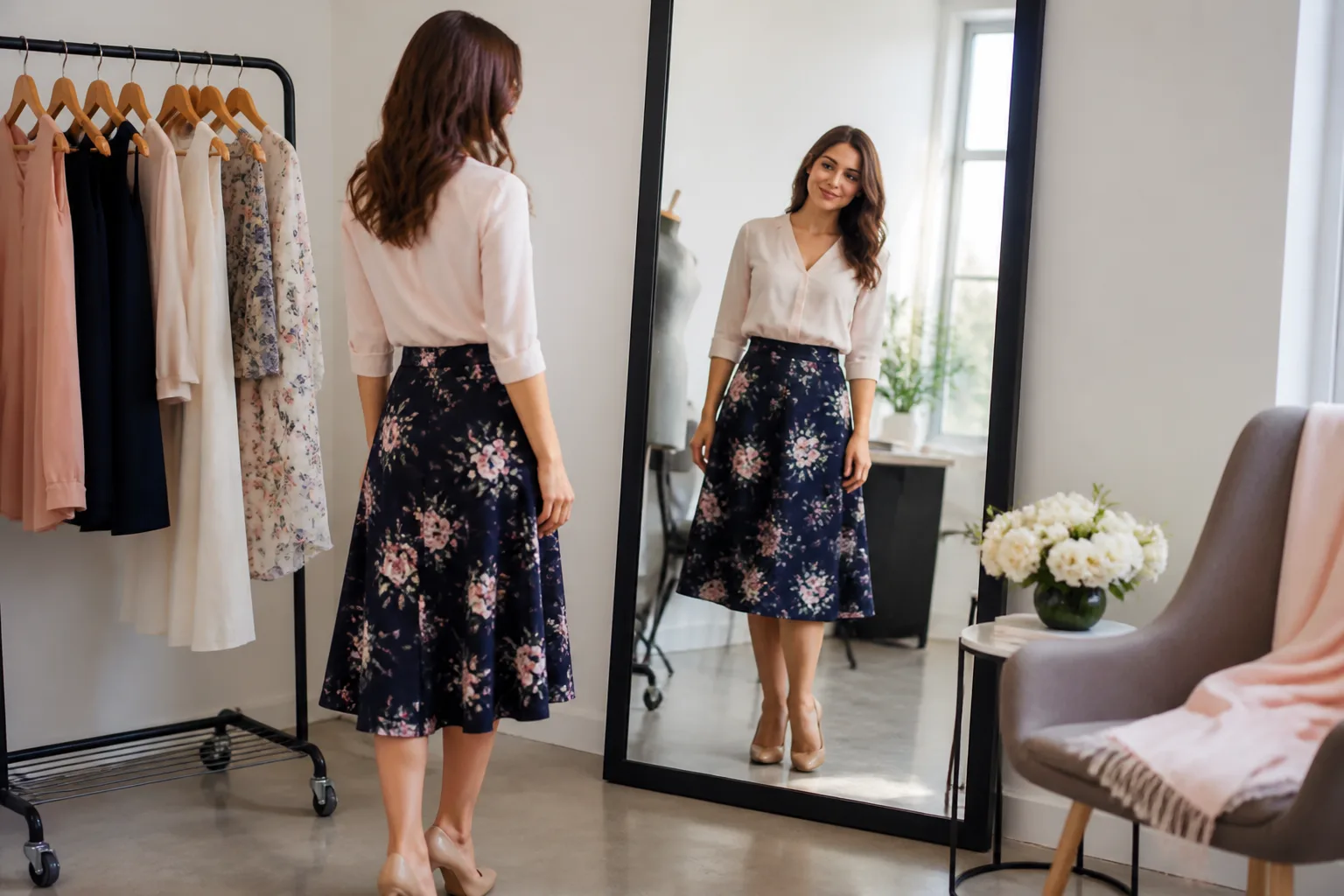
High-rise skirts, wrap shapes, belts, and fit-and-flare silhouettes can suggest definition without painful compression.
Fit Is More Important Than Size
A larger number that hangs cleanly looks better than a smaller garment pulling at seams. Tailoring can solve proportion problems.
Start With Accurate Measurements
Measure the chest, waist, hips, shoulder width, sleeve length, and torso length while wearing the undergarments or shaping pieces intended for the outfit.
Women's sizing varies widely, so use each brand's chart. If a garment fits the waist but pulls across the shoulders, choose for the larger area and tailor the rest.
Balance Broad Shoulders
Open necklines, simple shoulder seams, vertical layers, and softly structured fabrics can reduce visual width. Excessive shoulder decoration, tiny cap sleeves, or a neckline ending at the widest point may emphasize it.
A fuller or A-line lower half can balance the upper body. The purpose is not to hide shoulders, darling; it is to make the complete silhouette look intentional.
Suggest Curves Without Pain
High-rise bottoms, wrap construction, shaped seams, peplums, and controlled volume can create waist-to-hip contrast. Padding and shapewear are optional tools, not requirements.
Anything that restricts breathing, causes numbness, or rolls painfully is the wrong fit. A smooth line matters more than squeezing into a smaller number.
Use Color and Fabric Strategically
Darker or quieter colors recede while brighter colors and texture attract attention. Place the strongest detail where you want the eye to rest.
Fabric weight also changes shape. Stiff material may add structure; fluid fabric follows the body. Try garments while standing, sitting, and walking before deciding.